

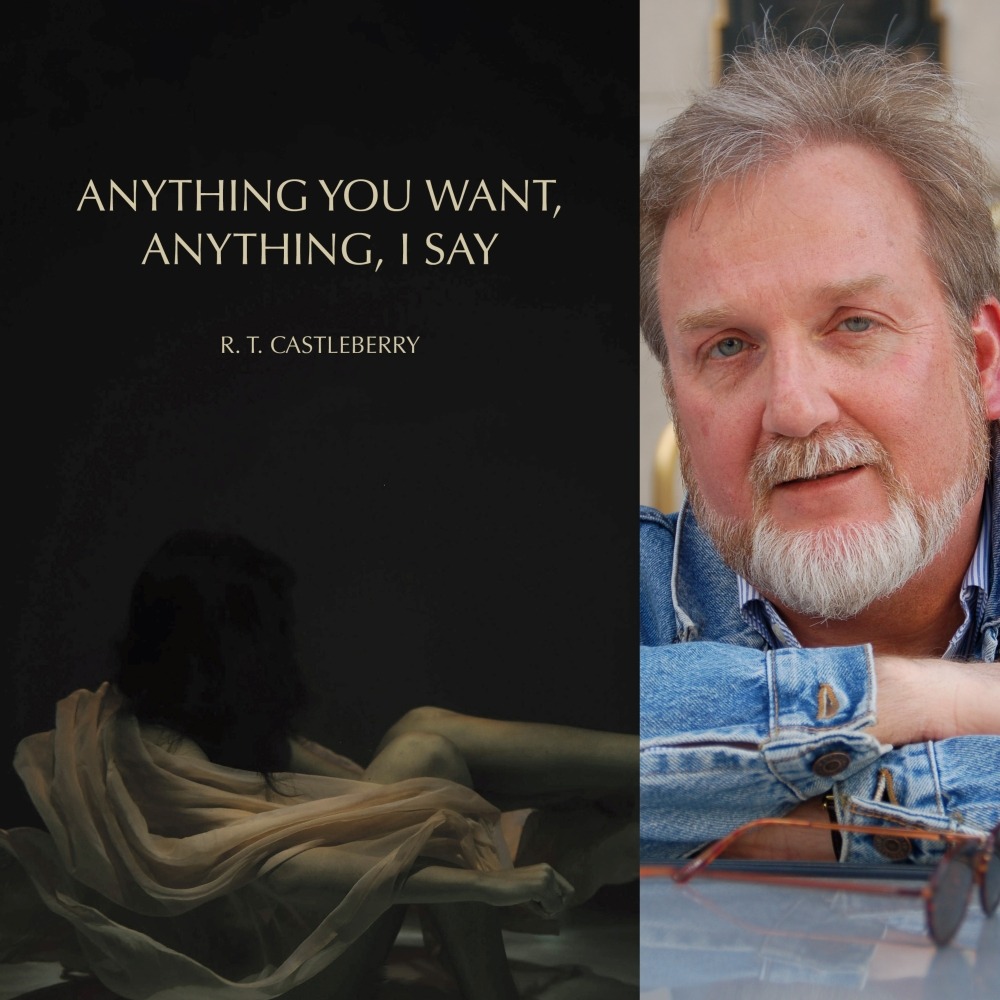
The late R. T. Castleberry’s work has appeared in Comstock Review, Green Mountains Review, Santa Fe Literary Review, The Alembic, Pacific Review, RiverSedge and Caveat Lector, among many other journals. His poetry was nominated for a Pushcart Prize. He was a co-founder of the Flying Dutchman Writers Troupe, co-editor/publisher of the poetry magazine Curbside Review, and an assistant editor for Lily Poetry Review and Ardent. His work has been featured in the anthologies Travois-An Anthology of Texas Poetry, TimeSlice and The Weight of Addition, among others. His chapbook, Arriving at the Riverside, was published by Finishing Line Press in January, 2010.
PRAISE:
These poems, first and foremost, are composed of stunning poetic craft, crystalline with precision, sophisticated in the employment of assonance and alliteration, and replete with lines taut as the wires of a freshly tuned piano. A major theme recurring in many of them is human longing, a longing so intense it is palpable: a longing for sustained and meaningful connection to a lover, family member, or a friend. Romance, when it does occur, appears fleeting, half-satisfying, and troubled as one would experience in a tryst or an affair. Castleberry embraces the mystery at the core of human existence, and the existential angst relieved only momentarily by beauty and art: “the secrets of Al Green’s falsetto,” or “woodwinds in quartet.” In opposition to the bleak and interminable longing in these poems are passages of breathtaking beauty: the beauty of the natural world, the beauty of refined and fierce perception, and the beauty of language rendered at the highest possible level.
–Larry D. Thomas, 2008 Texas State Poet Laureate, Member, Texas Institute of Letters
In Anything You Want, Anything, I Say, R. T. Castleberry takes us to places that test our devotion—bedrooms, porches at dusk, church aisles, the edge of a storm at 2 a.m.–measuring what survives erosion. Beauty is luxuriated, even when tempered by illness, fatigue, and rage. Hard lessons about death echo between each poem. Abstractions in his work resolve into tangibles—perfume, Scotch, prayer books, hurricane lamps. Weather moves through the lines, carrying weight inside measured syntax and patterned phrasing. His lines stay lean, as tension hums beneath them. A motif of long partnerships drives the collection—years shared, habits formed, beauty waning, luck narrowing. Beneath restraint, narratives unfold inside lyric form, emotion is shaped into image and gesture rather than excess. Anything You Want, Anything, I Say is compressed, sensual, and exacting. Castleberry writes from within the slide of time—implication, desire, aging, entanglement—and shapes that pressure into poetry.
–Chris Wise, Author. Poet. Trouble.
Reviews
There are no reviews yet.