

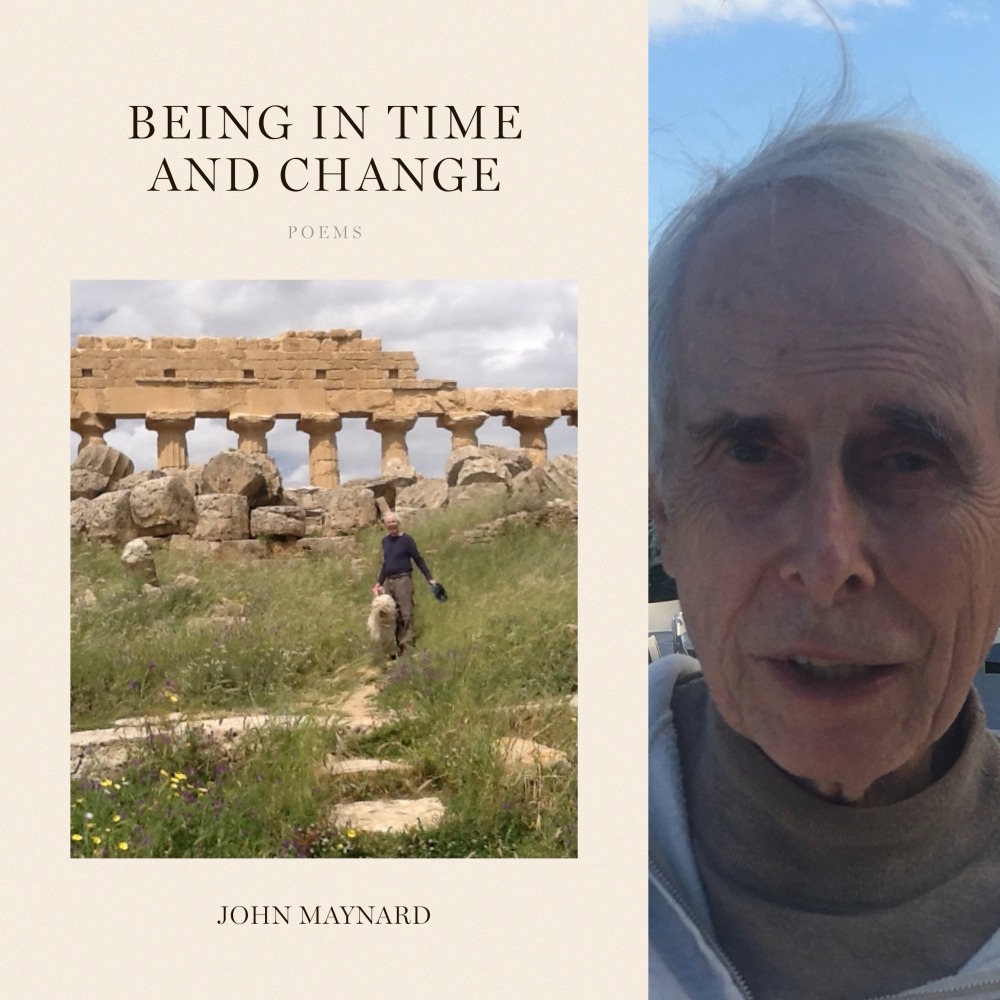
John Maynard is professor emeritus at New York University. His written work includes biography, literary history and criticism, including studies of literature and sexuality, and theory of reading and readers. As he neared retirement he devoted himself to writing poetry. He has published one book of poems and plans a number more in addition to the present volume, including a series on time and change. Much of his poetry was written in New York’s Central Park as he explored the park with his dog Maisie. This book of poems reflects on the diversity of his own and others’ experiences of growing old.
PRAISE:
We live our lives in the odd element of time. Our beingness is driven and riven by change, always change. But in our selves we can travel back and forth in time, seizing the past only to yield it up again, anticipating the future with joy or dread. These poems explore the being we all have in time and the change it produces. They interweave stories and images—celebrating, painful, sometimes accepting–of past, future, and being-present within the changes of time. Some of the poems are personal, recalling earlier life and later times with reexperiencing intensity or elegiac feeling of loss; others define universal experiences with pain, joy, or humor; still others think about large periods of time, our origins and ends, sometimes ironically, sometimes acceptingly; and finally, a certain number think about the mystery of time itself. ”The boy who wanted to be a major poet in his youth,” to quote a line from John Maynard’s brilliant new book of poetry, has become one in his later years. Major this collection is, measuring life out by fleeting moments brilliantly captured. If there is any consolation for the passing of time, for our mortality that Maynard captures time and again, each time in a new key, it is that these poems, with all their memories, passions, glories and regrets—with all their piercing explorations of the human heart—will be read with great pleasure and will live on.
–Julia Markus is a novelist and biographer. Her novels include Friends Along the Way and Uncle, winner of the Houghton Mifflin Literary award. Her biographies include Dared and Done. The Marriage of Elizabeth Barrett and Robert Browning and Lady Byron and her Daughters.
John Maynard is a metaphysician, who juggles elegy and celebration. Feeling a bit down about being declined into the vale of years? Well Maynard will accompany you along that sullen pathway, but then hit you with lines like this:
“Today, you forgot yesterday.
Today only knows
What today knows—
And begins to forget.
Tomorrow will wish to forget
What yesterday wanted to know.”
Yes, this is what I wanted to know, even though I didn’t know I knew it. Things are OK. Thank you, John. Paradox reigns.
–Charles DeFanti is a biographer, author of The Wages of Expectation: A Biography of Edward Dahlberg, and Editor, Welcome Rain Books.
Reviews
There are no reviews yet.