

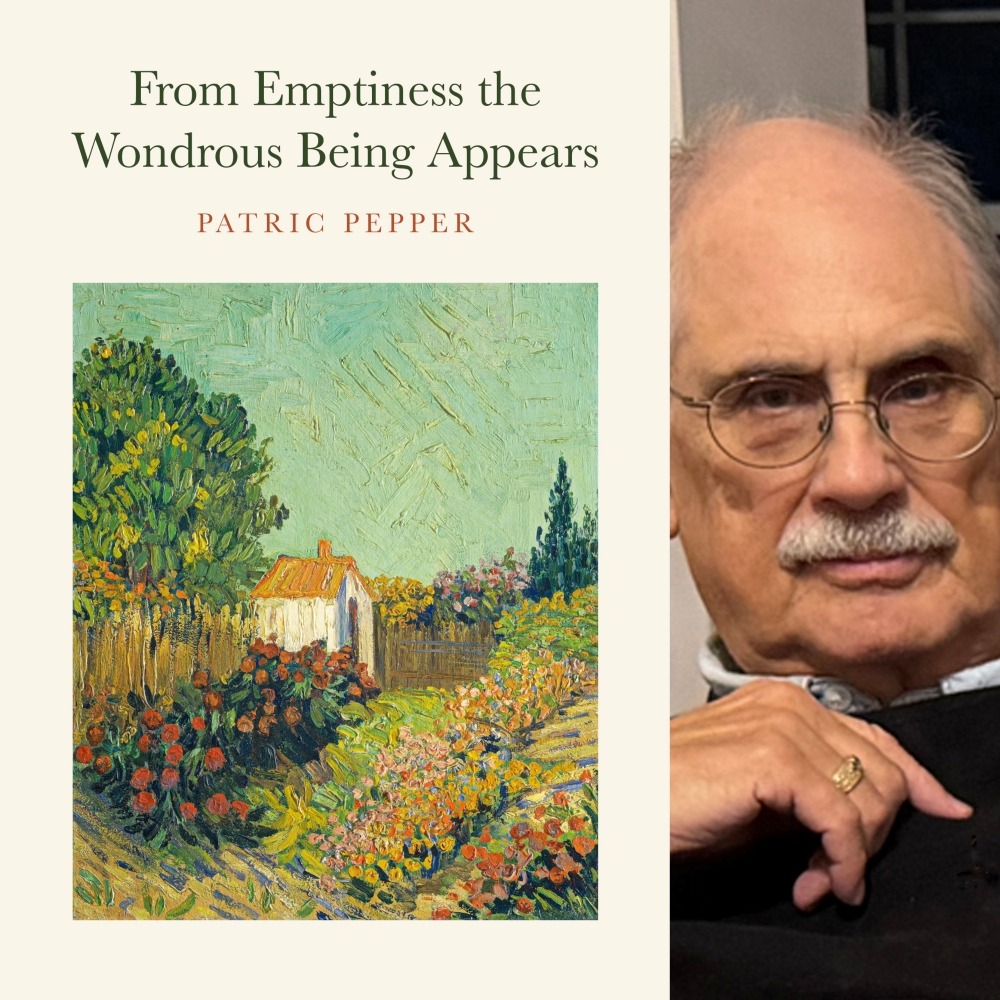
Wonder is at the center of Patric Pepper’s striking collection of poems, the wonder and awe of the world in all its many guises, and in a poetics whose voice is unusually nuanced in its linguistic diversity and range. From the seemingly mundane, “U-Hauls [that] grumble through the city” to lyrical meditations like “This Windy Afternoon” — “I love its invisibility, / and its visible imposition, so incisive / and so cold” — to the familial and anecdotal “Grandfather, Grandson”: “I yell to him. He smiles as he recalls / Some essence I’ll forget and rediscover / When he is dead.” — to the philosophical meditation of “Albeit”: “The world persists in whirling through space . . ./About the dead center that is no dead center/but just another center in the nothing./In the nothing,/albeit the nothing’s full to overflowing,/like the Grail.” In free verse, subtlety rhymed lyrics, ghazals, sonnets, haiku, elegies, and other traditional forms, Pepper is a poetic flaneur who warmly invites us to accompany him to witness, through the evocativeness of language and rhythm, all — everything he encounters, both Inner and Outer.
–Merrill Leffler, author of Mark the Music
.
Patric Pepper is sui generis. A poet-philosopher with a lyrical bent and a wry sense of humor, he never goes for the easy thought or phrase, but, like his “Sister Leonilla,” who “watched all things and shared their dignity,” he views the strangeness of this world with awe and amazement. In deeply felt poems that range from formal to free, he can transport us in a few brief lines from the “dutiful clear ambivalence” of urban trash collectors all the way to the Milky Way and back. These are poems of love and wonder at our human place on “The Great Monkey-Trilobite Continuum of Being.”
–Jean Nordhaus, author of Innocence
.
Patric Pepper takes on immense questions. He finds his answers in the everydayness of clouds and Ethiopian grocers, funerals and goofy lovers. His inner ramblings play out in chapels, on city streets, or walking paths, where he finds wonder and astonishment. His questions — “What have I in mind?” “His heart? Its heart? My heart?” “Who lives up in the clouds?” “Is it fresh?” “Have the carp gone deep?” — circle home to a central question: “What is I?” As readers, we face many choices and decisions, and like the gods Pepper explores, we thrash, we envy, we love, and perhaps kill off our “deadwood” selves in favor of the new. Yet, here we are, all of us, ambling with the poet, ending up — “somewhere again?”
–Bernard Jankowski, author of Music in the Halls
Reviews
There are no reviews yet.