

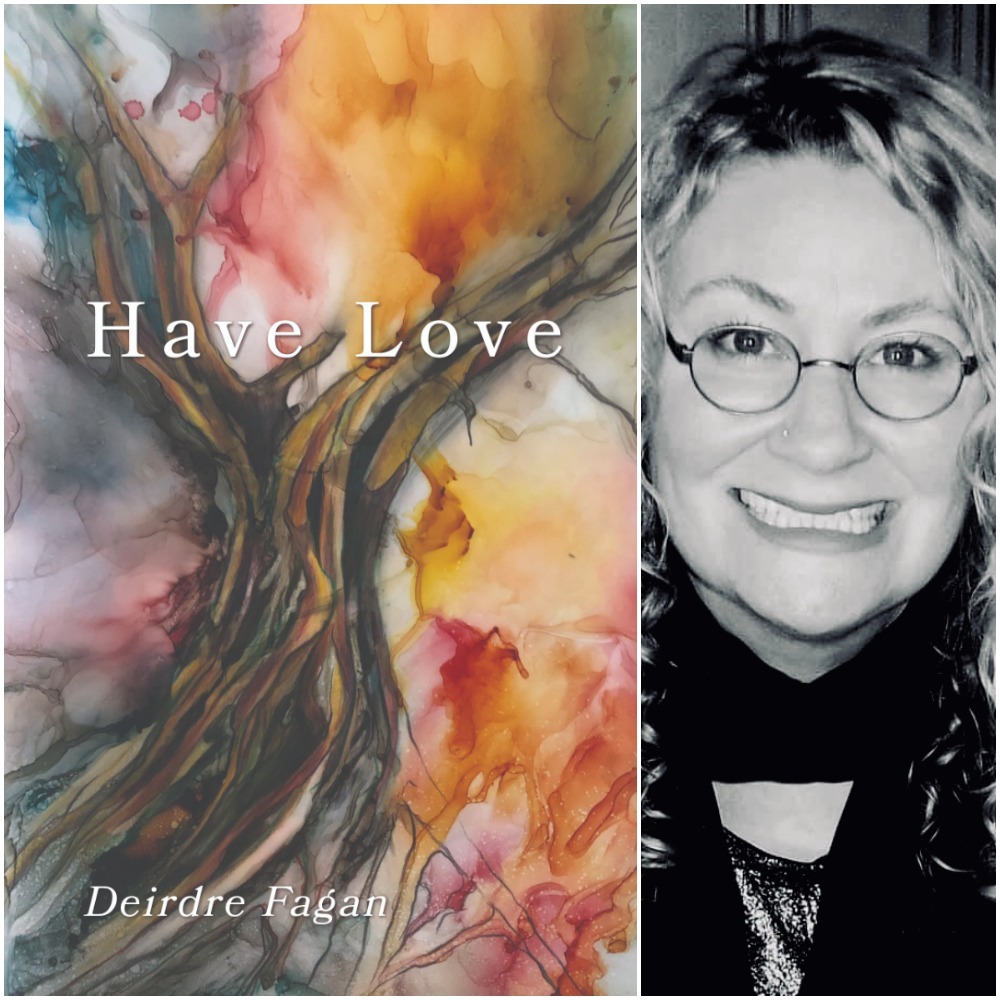
Deirdre Fagan is a widow, wife, mother of two, and an award-winning multi-genre author of five books, most recently the poetry collection, Phantom Limbs (2023) and the memoir, Find a Place for Me (2022). Fagan’s scholarship and writing have been widely published and featured on ABC, CBS, and NPR television and radio, as well as in Newsweek and HuffPost. Fagan is professor and coordinator of creative writing at Ferris State University and the editor of the Orange Blossom Review. Meet her at deirdrefagan.com
PRAISE:
It’s a pity Deirdre and I are not, to our knowledge, related, because I’d be delighted to have another poet in the family, especially one as clear and insightful as this one. Have Love is a book that both grieves and celebrates love, its unexpected gifts and its tragic losses, the humans who embody it and the human body’s degeneration. Have Love is courageous enough to be dazed by love’s comings and goings. “Sometimes the worst thing that can happen/is the thing that already has.” In this book, it has and it hasn’t—it’s just love, and we are its grateful survivors.
–Kathy Fagan, author of Sycamore
“I may be able to ride on these brevities all my life,” Deirdre Fagan writes in “How Contentment Comes.” Have Love offers unflinching, intimate glimpses into familial and romantic scenes, challenging our assumptions about giving and receiving love. There is pain when relationships and bodies fail, but the speaker opens herself up to “a new voice singing” and urges us to “Stir, stir the soup./ Light the candle./ Wash your face.” Contentment comes despite—or perhaps because of—loss. And we readers have the pleasure of riding on the brevities of Fagan’s tender, hopeful images.
–Erin Murphy, author of Assisted Living
In poems varied in length and shape including tiny poems the size of blossoms or bruises, Deirdre Fagan pens a marvelous sheaf full of nearly epigrammatic lines on the death of a spouse and the power of love to reclaim life in the afterwards. These are poems that inhabit bodies, that breathe and sing and mourn and remind us to keep going, even “to climb inside” of the Beloved, even if “There is a worse thing,/ always a worse thing.” Despite the loss, the poems say: we must live. We must eat. We will and must go on.
–Sean Thomas Dougherty, author of The Second O of Sorrow
Reviews
There are no reviews yet.