

PRAISE:
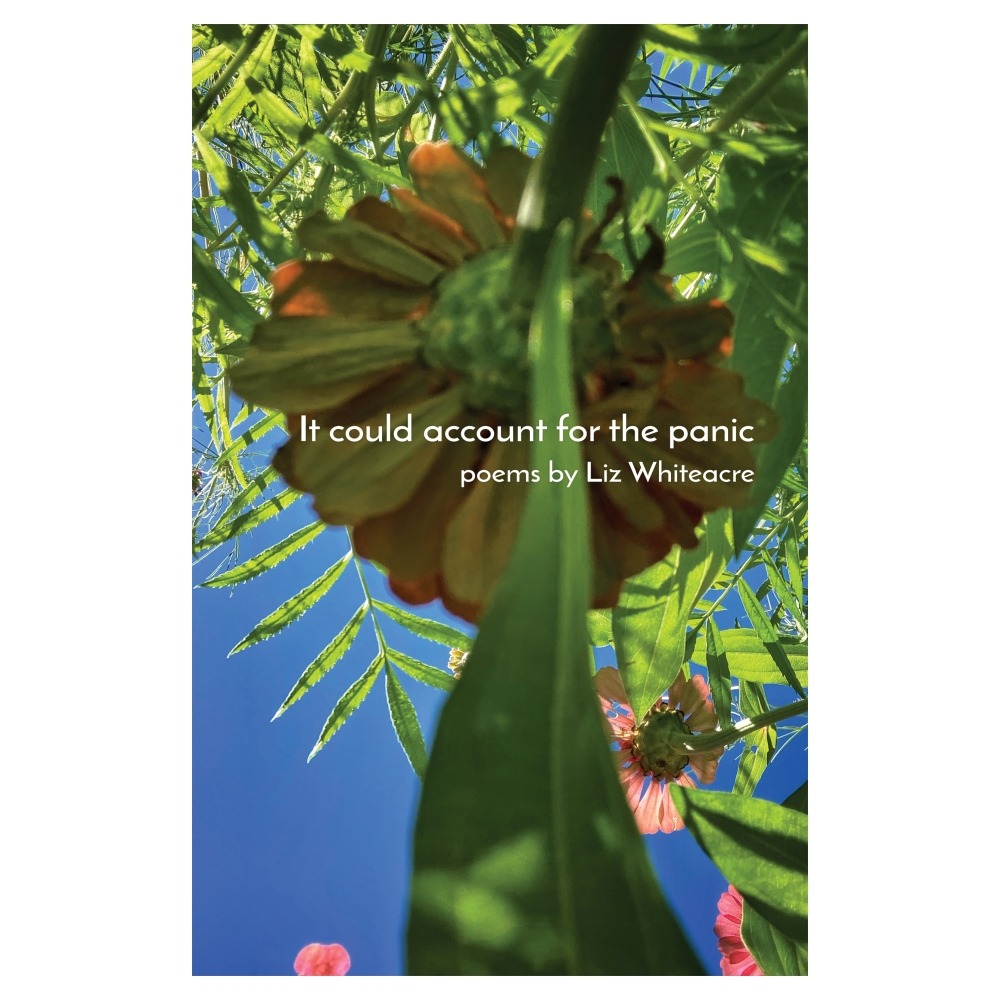
Reading it could account for the panic is a journey into the visceral experience of temporal lobe epilepsy (TLE). A collaboration between poet Liz Whiteacre and composer Meadow Bridgham (who shared their experiences with TLE to forge the poems), the work is taut, lyric, and propulsive. Using Lewis Carroll’s Alice in Wonderland as analogue and metaphor, the poems draw us into the TLE mind-body space, amplifying questions of being and identity. In the title poem, the speaker asks, “What if you were injected into a dream, trying to ride a dysphoric, euphoric, chaotic roller coaster, trying to follow disjointed details, forcing a narrative? Did you ever think about that?” With precision, dispatch, and flare these poems revision alternative mind-body spaces from “less than,” or “tragic,” to sites of imaginative possibility. This is a book that will change you.
–Shelia Black, author of All the Sleep in the World
In it could account for the panic, poet Liz Whiteacre and musician Meadow Bridgham invite readers into the surreal world of temporal lobe epilepsy (TLE). With a crip aesthetic, the poet uses defamiliarization to blur reality and drop us down a rabbit hole where nothing is as it seems; when one might see only loss, these poems explore the complexity—beneficial and destructive—of learning a new way of living. The poetry collection ends with hope for the future stating: “I want to work towards our harvest / we’ll pull things up and start over: next season will be better. / We’ll learn from this, grow, & move on.” These poems show us the truth that the disabled live everyday: the social expectations and reactions are often more disabling than the impairment itself.
–Kara Dorris, author of Have Ruin, Will Travel and When the Body is a Guardrail
In it could account for the panic, poet Liz Whiteacre collaborates with musician Meadow Bridgham to bring Bridgham’s experience with temporal lobe epilepsy to the printed page. In poems that range from delicate lyric to raging prose Whiteacre captures the wonderland of experience that Brigham has—not only the emotional, bodily and social challenges but in the creativity that it has fostered. Through Whiteacre’s skill as poet, readers who follow Bridgham down the rabbit hole will emerge with a greater understanding of what a life with temporal lobe epilepsy is like.
–Michael Northen, editor of Beauty is a Verb: The New Poetry of Disability
NEWS AND REVIEWS:
Reviews
There are no reviews yet.