

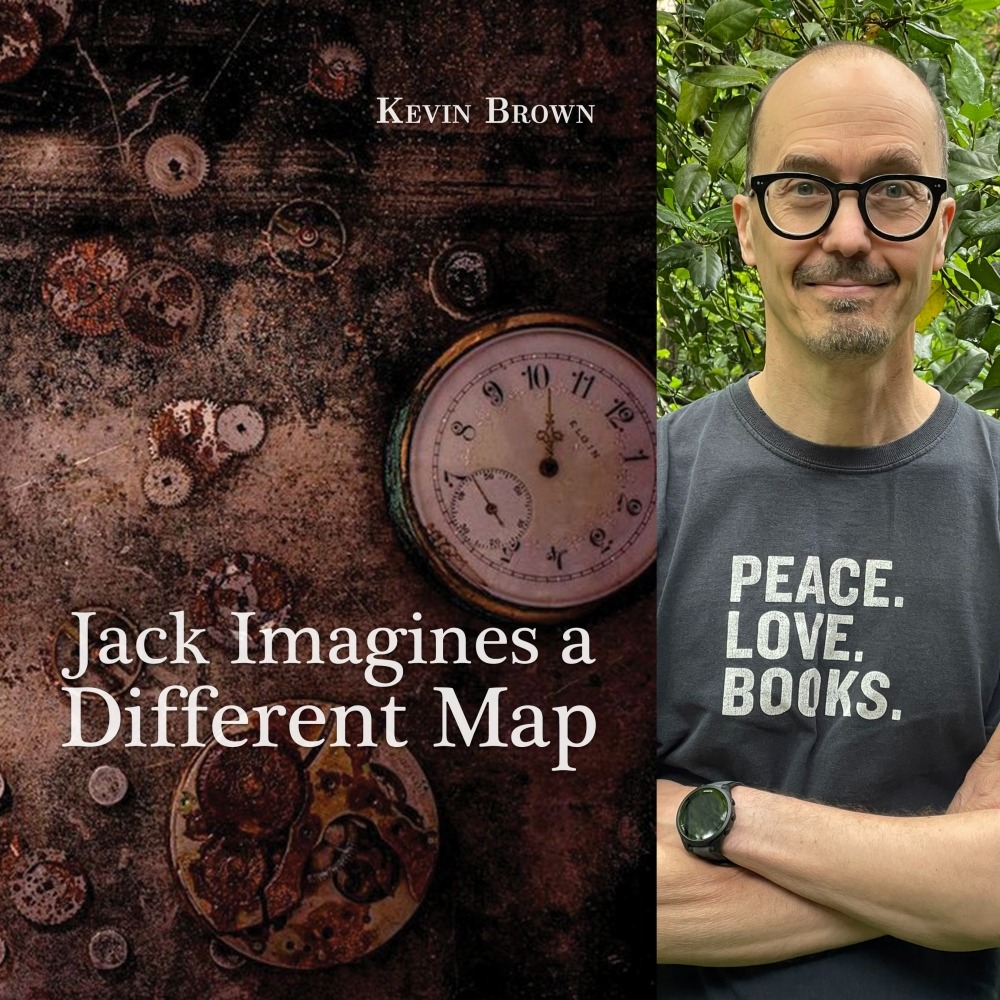
Kevin Brown is a high school English teacher in Nashville, TN. He has published three previous books of poetry: Liturgical Calendar: Poems (Wipf and Stock); A Lexicon of Lost Words (winner of the Violet Reed Haas Prize for Poetry, Snake Nation Press); and Exit Lines (Plain View Press). He also has a memoir, Another Way: Finding Faith, Then Finding It Again, and a book of scholarship, They Love to Tell the Stories: Five Contemporary Novelists Take on the Gospels. You can find out more about him and his work on social media sites at @kevinbrownwrites or at http://kevinbrownwrites.weebly.com/.
PRAISE:
In this charming collection, the titular “Jack” seems to have parachuted into middle age. He suddenly finds himself inside a past-its-prime body and a plateaued career. Despite some nostalgia for teen romance and high-school basketball heroics, Brown steers the poems clear of self-pity. Instead, Jack treats mortality like a foreign country—something to be approached with curiosity and wonder. When faced with the dying of the light, Jack and his friends neither rage nor go gently. Instead, they make themselves membership cards in the “Future Corpses of America” with pilfered office supplies while they’re supposed to be working. The poems serve as a clear-eyed reminder to readers of a certain age: that life is still sweet, even once our best days are behind us.
–Tyler McMahon, author of One Potato and editor of Hawaiʻi Pacific Review [note the mark in Hawaiʻi is an okina, not an apostrophe]
What John Berryman did with his Henry persona, Kevin Brown does with Jack in this charged brew of meditations on the profound corners of the mundane: father statistics and sirens-next-door, pangs of adulthood, awkward office encounters, fading birthday Polaroids, wistful schoolyard reminiscences, smiles “full of furniture.” The poems deftly build a bulwark against the ravages of time as a way, Brown writes in a Beckettian phrase, to come to terms with “what we can and cannot carry.” Using Jack as an alter ego lens on life, Brown invokes the power of the poetic imagination to ease the existential burdens of aging and the inevitability of death.
–John Parras, Editor, Map Literary
Reviews
There are no reviews yet.