
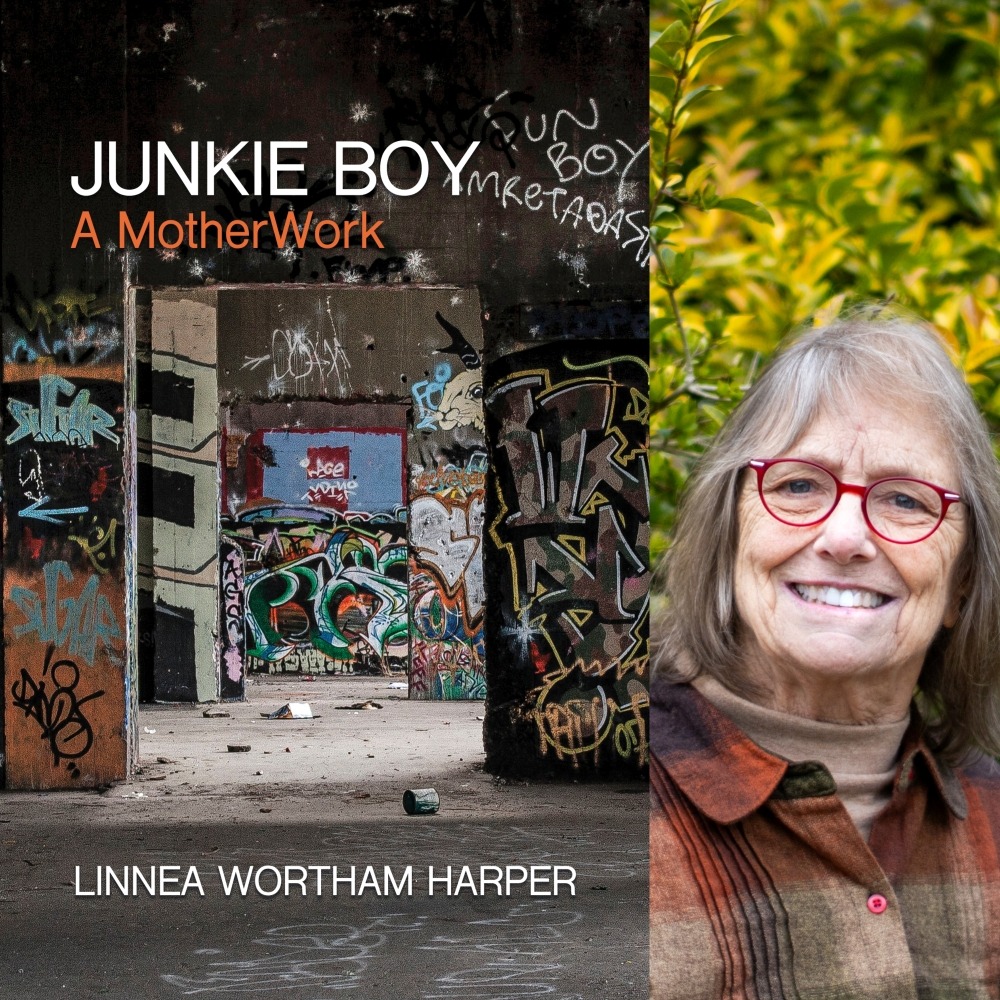
Linnea Harper writes poems on the Oregon coast, where the climate is friendly and the dress code is Wear Something. When her first child, now 48, left home at 15 in search of more freedom and better drugs, Harper reluctantly joined the millions of other mothers and families who struggle to make peace with themselves and the children who choose “freedom” over family, but find that their choices ultimately trap them in sordid lives and chemical cravings they cannot escape. Avoiding shame, blame, wallowing, and easy answers, Harper’s poems can open hearts, stir feelings, and start conversations.
PRAISE:
In Linnea Harper‘s debut collection, Junkie Boy, a mother wrestles with grief and loss in the face of her son’s addiction through poems of masterful craft and dazzling language. The book begins with a haiku of a child’s empty bed and the turning of the season toward winter. In the title poem, Junkie Boy, Harper uses muscular lines and deft, gorgeous meter and rhyme to convey the tensions between loving with a mother’s desperate love and the heartbreak of letting go. Before the moon betrays the dark/ Come spooning home, my unstrung harp, she writes in a poem of delicate sensitivity, ear tuned to the music of sorrow. The book explores themes of ambiguous grief, substance abuse, incarceration, and self-actualization as the author stakes a claim to what it means to be a woman beyond motherhood and its lamentations.
–Heather Derr-Smith, Author of Thrust (Persea Books) and Outskirts (University of Akron Press).
Harper’s poems may be a difficult read for mothers of addicts, as they do look squarely at this modern American tragedy. These poems hit hard.
–Jean Esteve, Oregon Book Award finalist, author of Off-Key (Finishing Line Press), and The Winter Sun (Turnstone Books of Oregon)
Reviews
There are no reviews yet.