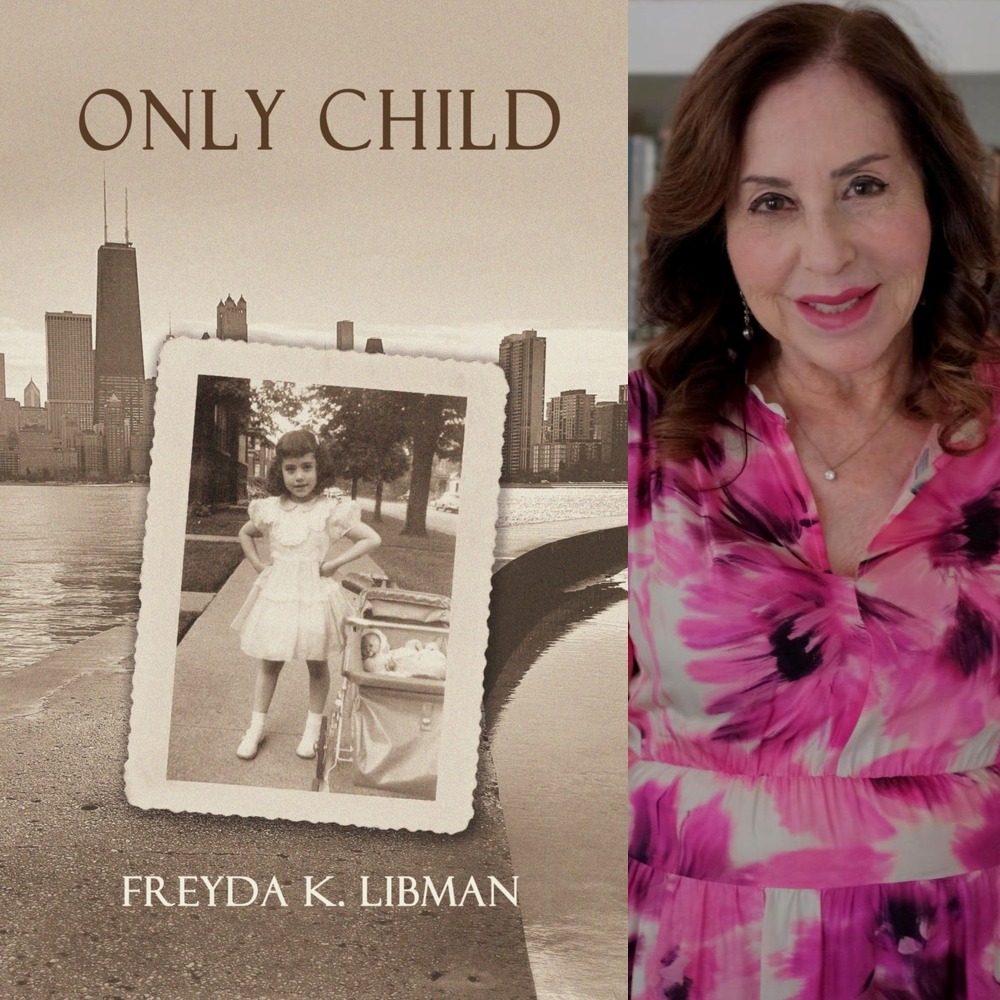
Freyda Libman graduated from Northwestern University where she also pursued graduate studies in American literature. A tenured professor in the English Department at the College of DuPage, she was honored as Outstanding Faculty Member by both students and colleagues. She made a lasting impact on her students through her courses on Holocaust literature, refugee studies, poetry, creative writing, and the works of Hemingway and Fitzgerald. Now retired in Arizona, she leads poetry study groups for the charitable arm of Brandeis University. She has published poems in Prairie Light Review, The Thing About Love Is…, and The Thing About Second Chances Is… This is her debut collection. @freyda.libman
.
PRAISE:
.
Only Child is a journal, a symphony, and a painting of a life in a city in all its grit, anguish, beauty, and emotional tumult. A masterpiece. Freyda K. Libman’s poetic magic turns her past into our past, beaming us to Chicago on her journey of longing, isolation, love, heartbreak, and sublime joy.
–David McGrath, author of Far Enough Away and contributing columnist for the Chicago Tribune
.
Love is a rebellious bird,” Freyda Libman writes in her new collection, Only Child, suggesting the beauty and struggle of her upbringing in Chicago as the daughter of Jewish immigrants. She explores and carefully reassembles fragments of her memory with a rare emotional acuity, turning them into a moving portrait of a family, a city, and of her own life as a poet and teacher.
–Tom Montgomery Fate is a retired English professor in Chicago. His most recent book is The Long Way Home, a travel memoir.
Freyda Libman‘s poems weave together a complex autobiography steeped in Jewish tradition and a childhood flavored by secrets and loss, a kind of bildungsroman that begins in earnest in the arms of the wilderness, comes of age in European cities, and transitions into a “season of severance.” As Libman’s mother fades into the fog of dementia, she posits the question, can a “poem prick…memory’s pale flesh” into remembrance? These poignant and beautifully crafted poems are themselves the act of remembering, a kind of modern-day Kaddish. The collection concludes in the Sonoran desert, where the speaker, once again, is wrapped in a kind of “wilderness comforter.”
–Dr. Rosemarie Dombrowski, Poet Laureate of Phoenix


Reviews
There are no reviews yet.